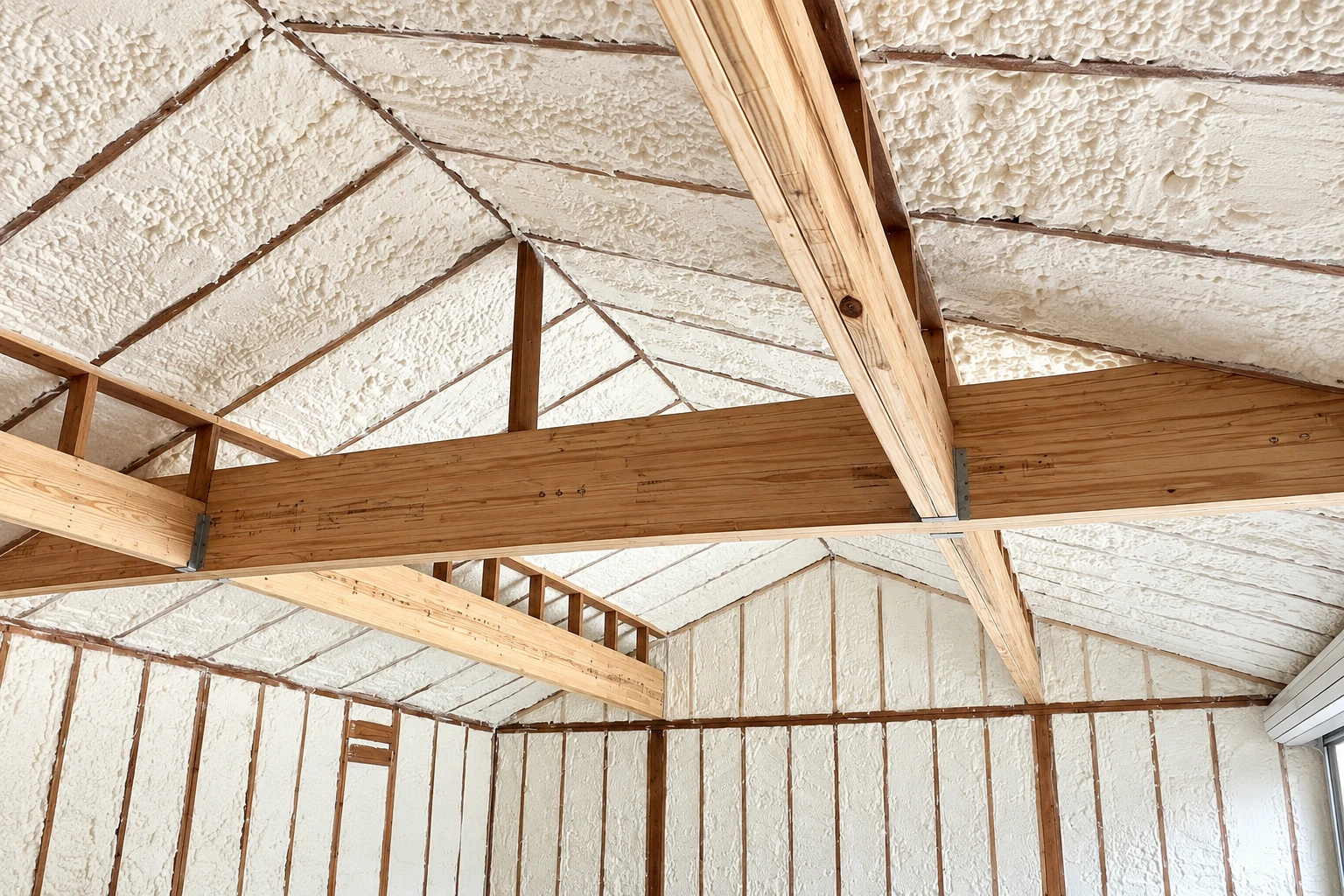
First I go through the attic, walls or crawl space with you and show you what's there, because foam sprayed over wet or dirty insulation just seals the problem in. Then we take on the big choice, open-cell, a softer foam, or closed-cell, a dense foam that also blocks moisture, and I lay out what each one does for your walls or roof, including how that wall will dry afterward, so we can pick together. We plan the days your household will be out while the foam cures. On the day, our crew covers what shouldn't get foam, gets foam into the gaps around pipes, wires and the hatch, and sprays an even coat right out to the edges instead of piling it deep in the middle, then trims and cleans up before you come home.
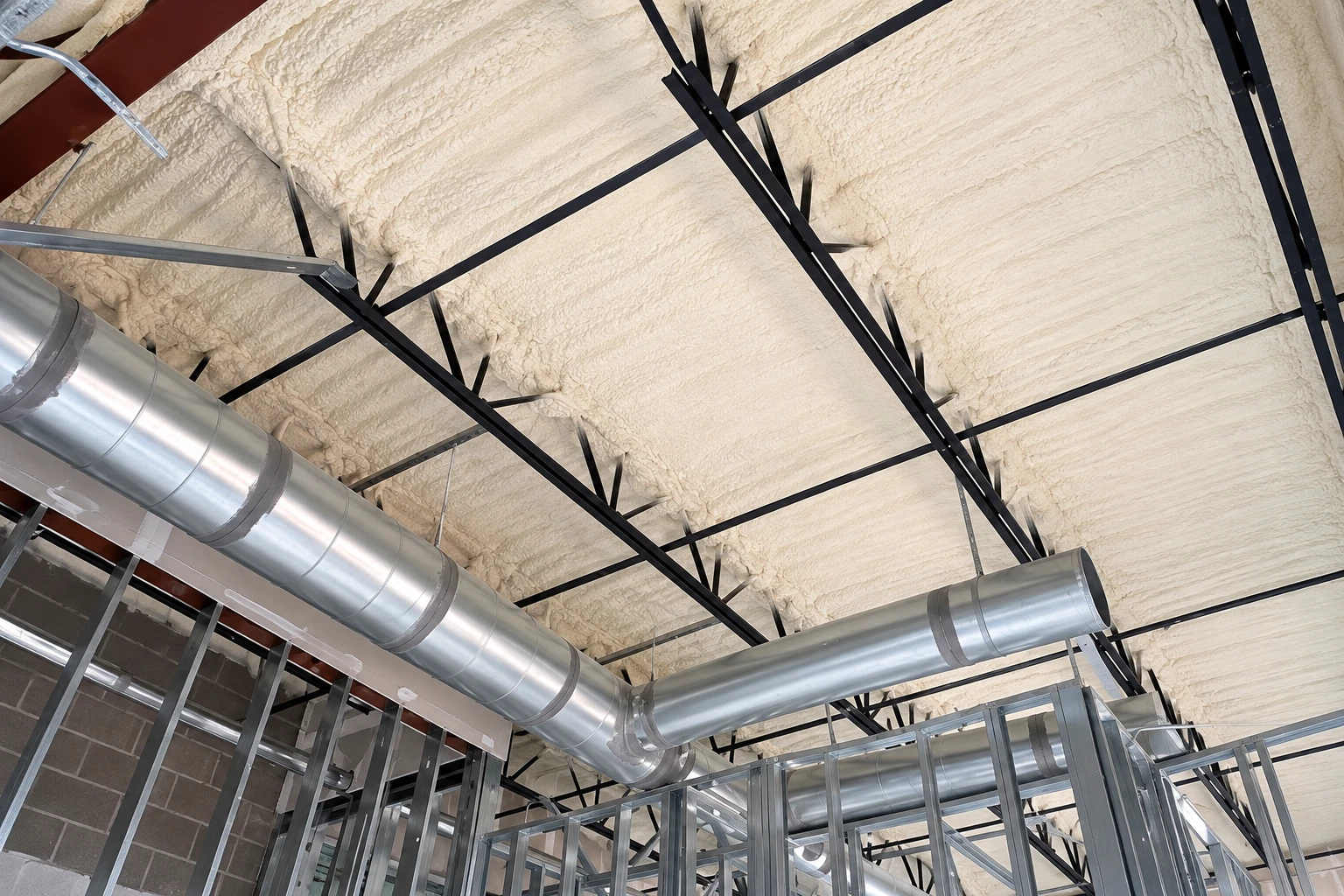
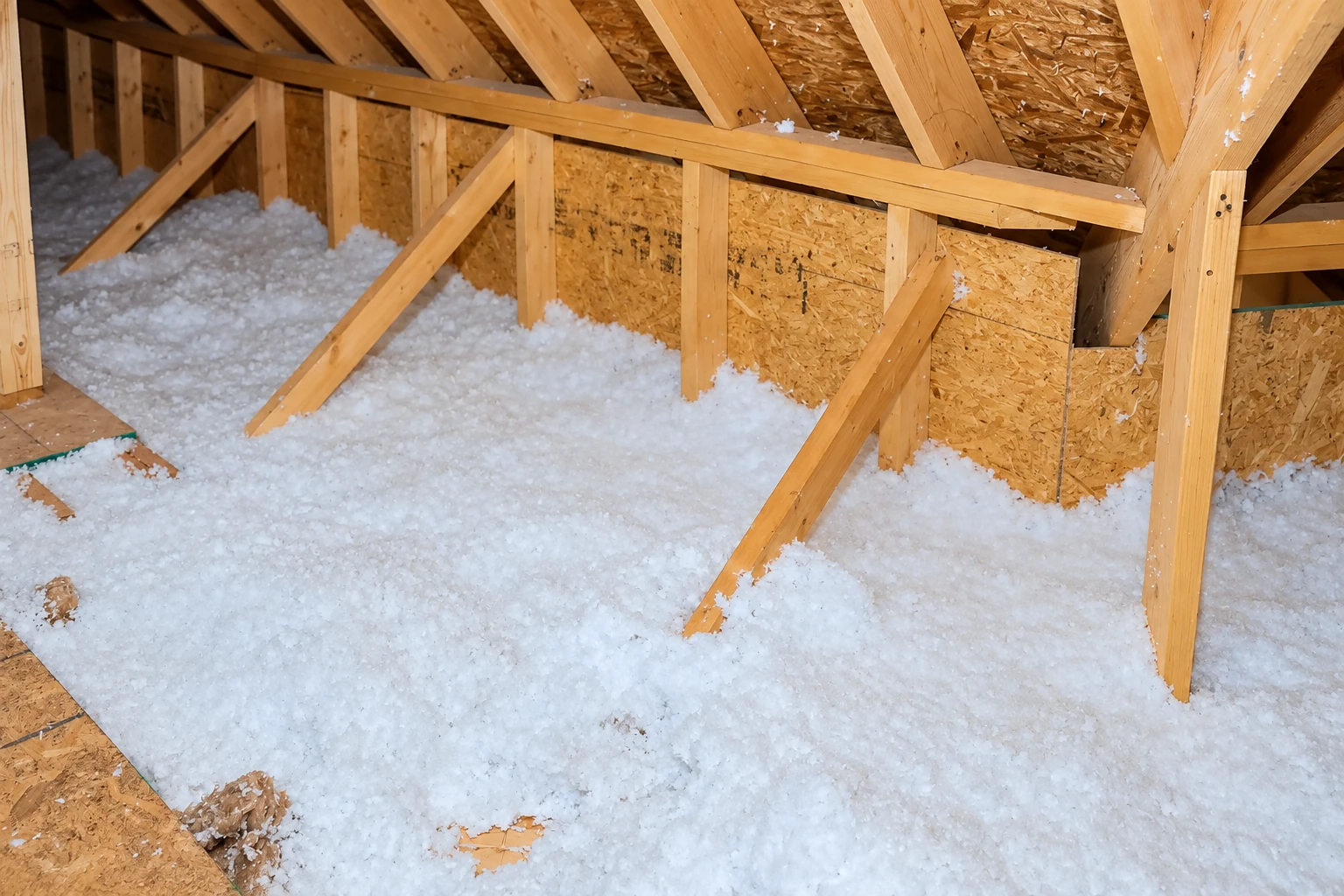
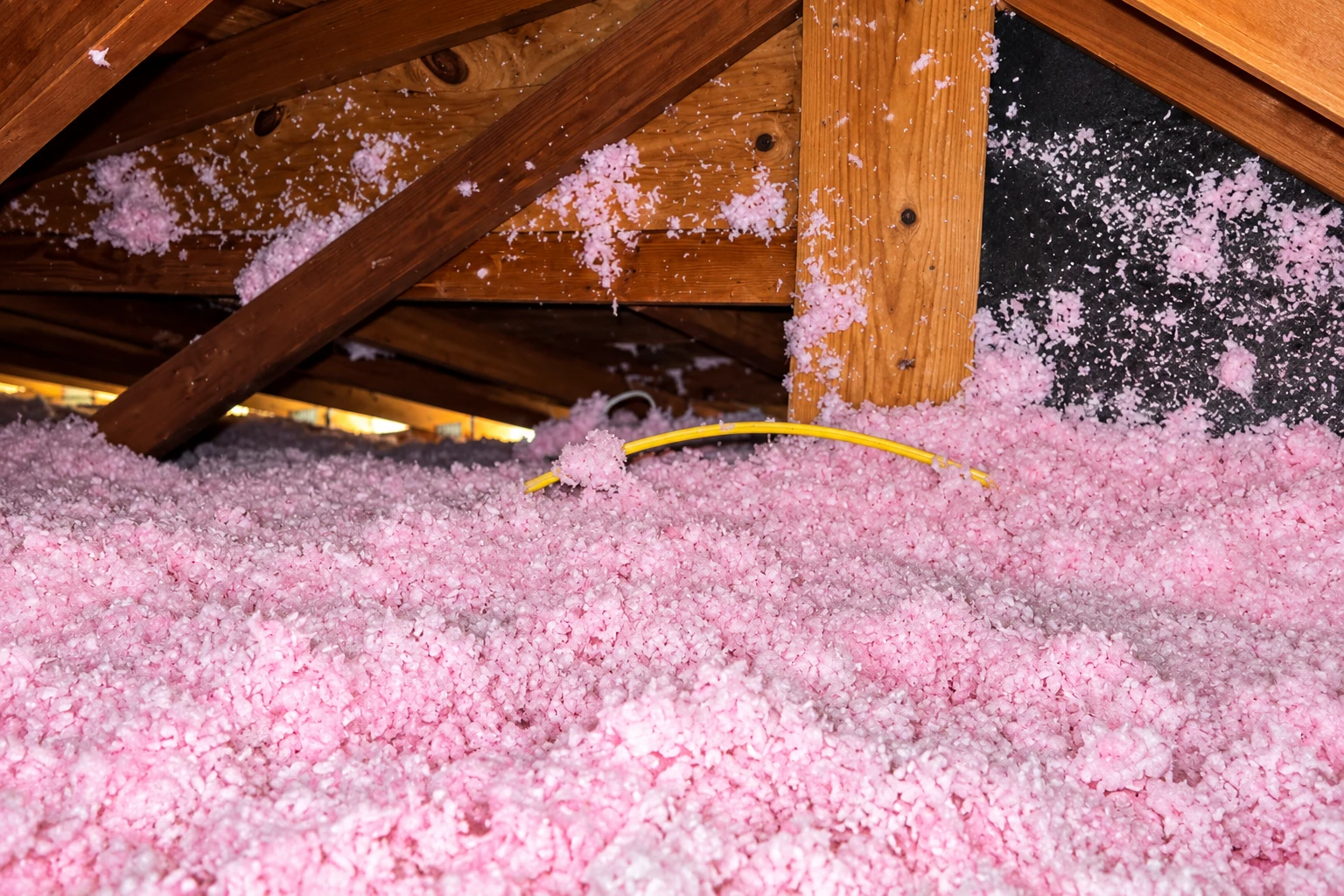
Foam isn't always the answer, and I'll tell you when it isn't. It costs more than loose fill, and that's worth paying when your ductwork runs through the attic or the space is too tight for anything else, because foam stops air in the same pass. If your ducts aren't up there, sealing the gaps and topping up with blown-in insulation usually wins, and our attic insulation work covers that whole job.
Open-cell foam for rooflines and deep cavities
This lighter foam suits places with room for depth, like the underside of the roof over an attic where ducts run. It costs less per inch than closed-cell, so it's the usual pick when there's space to put enough of it in.
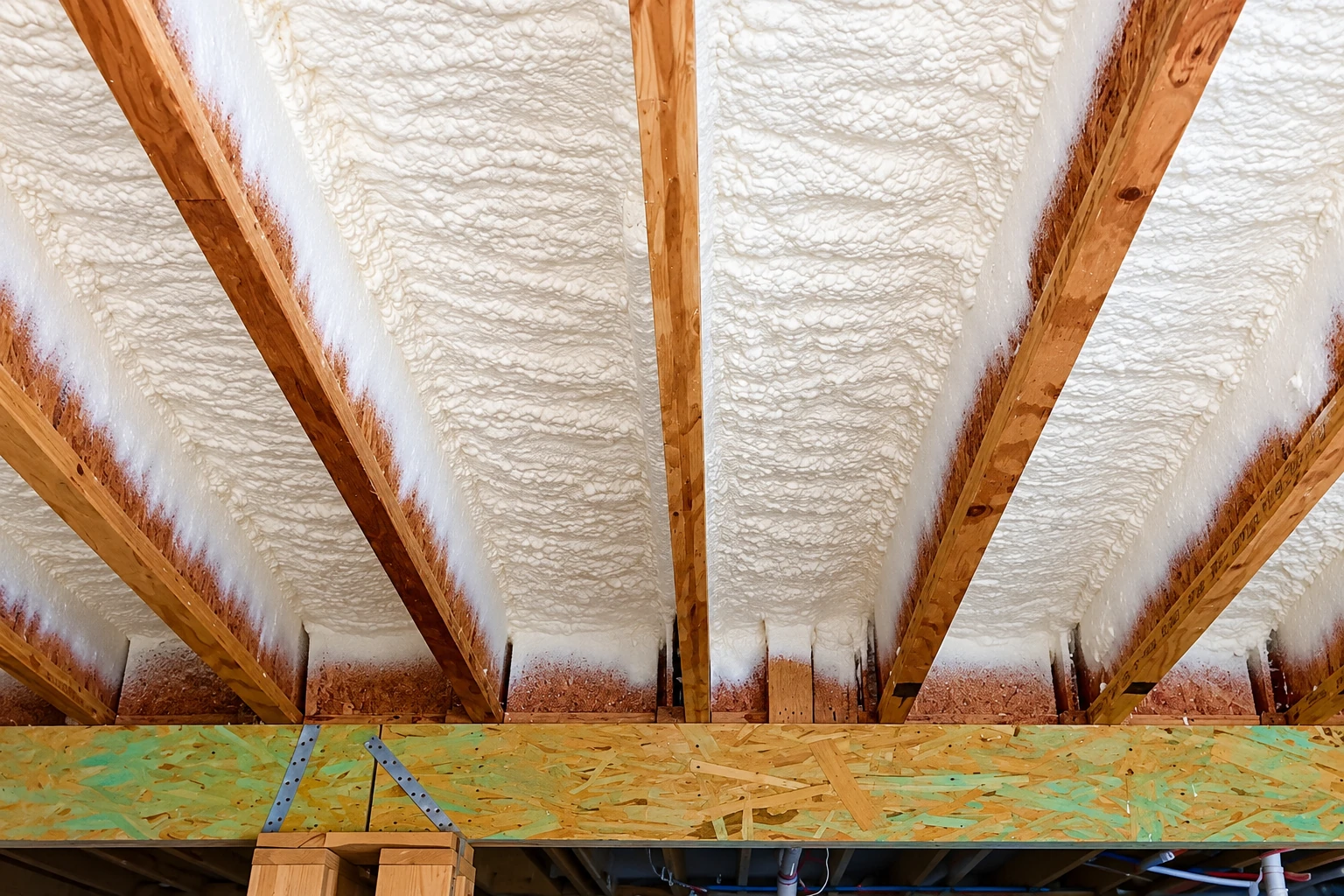
Closed-cell foam for tight or damp spots
The denser foam does more in a thin layer, so it suits shallow walls, the room over the garage, or a crawl space where you can't fit much depth. It changes how a wall dries, so we look at the wall it's going into before we choose it.